PhD Candidate, Institute for Astronomy, University of Hawai'i
About
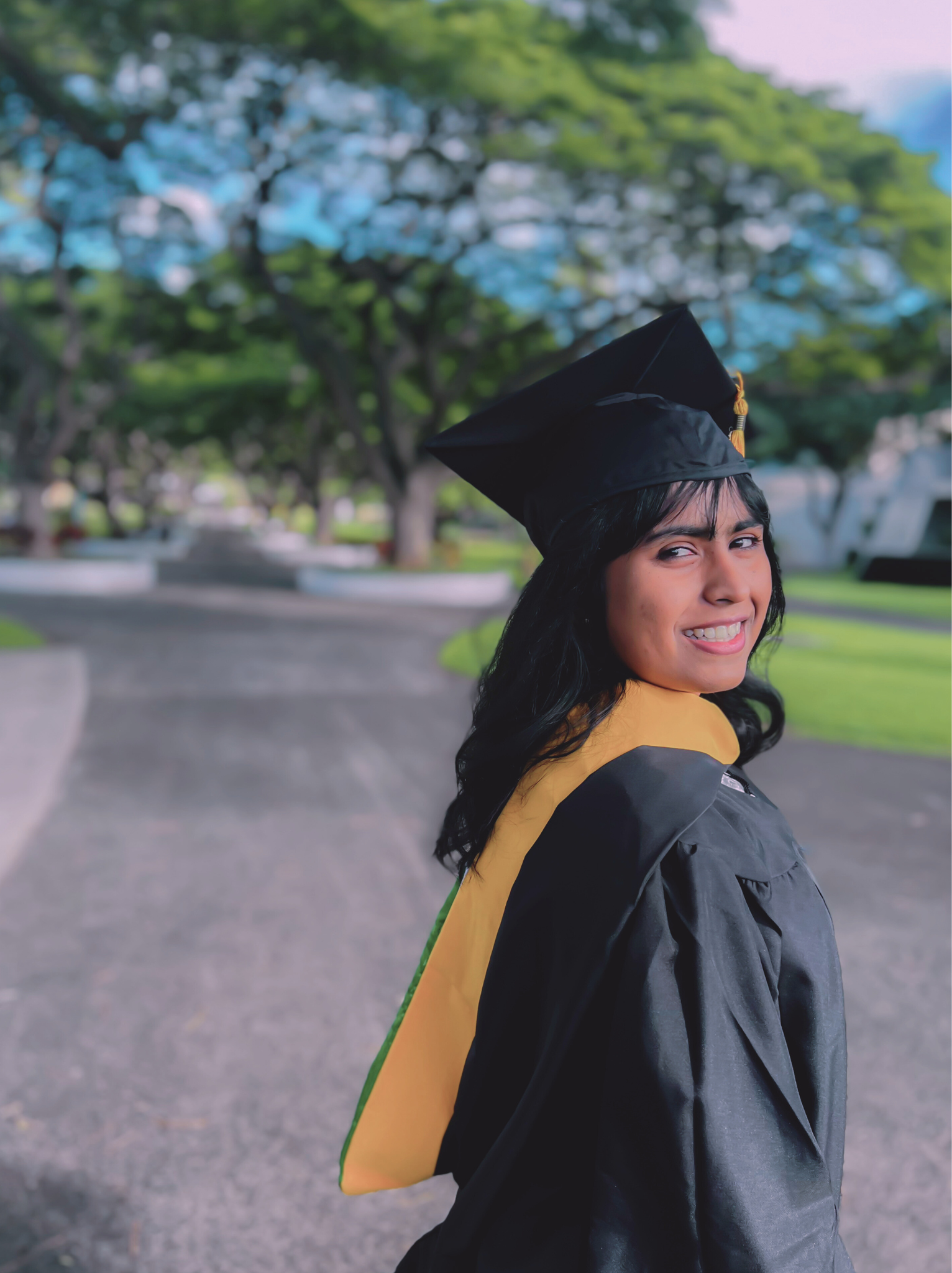
I am a fifth-year PhD candidate working in adaptive optics and high contrast imaging, at the Institute for Astronomy, University of Hawai'i. I am from Dubai, United Arab Emirates, where I lived for 18 years before moving to Los Angeles for my undergraduate degree. So yeah, I have come a long way to where I am today– about 13,800 kilometres. I am currently based in the WM Keck Observatory headquarters in Waimea, on Big Island.
I received my bachelors in 2020 from the University of California, Los Angeles, where I double-majored in Geophysics and Astrophysics, graduating magna cum laude and with highest departmental honors. .
My research, since my undergraduate years, has been motivated by the question: "How did our planet and its neighbourhood come to be?"
I was led to my current research through a very indirect path paved by a combination of my classes and various undergraduate research projects that came under an umbrella of fossils of the Solar System.
Having mapped meteorite samples and studied their mineral composition (with Prof. Kevin McKeegan, UCLA), constructed and analyzed models of condensation on planetary embryos (with Prof. David Stevenson, Caltech),
and reduced cometary images to understand their morphology and study their activity (with Prof. David Jewitt),
I indeed developed a greater appreciation of our neighborhood that I wanted to further investigate planetary systems and how they come to be.
My first-year grad project on a debris disk sealed this interest and pushed it more along the lines of direct imaging, which also inspired my field of focus for instrumentation.
Currently, I am working on the upgrade of the deformable mirror of Keck II telescope's adaptive optics system, which will enable exploration of a whole new regime of exoplanets and in-depth understanding of protoplanets in their nascent disks via
direct imaging and spectroscopy. My instrumentation work is also coupled with my research on the characterization of the protoplanetary disks that are optically faint, but bright in the infrared, which are the disks that are most likely to host planets in their early stages of formation.
You can read more about my research in the Projects section.
When I am not science-ing, I immerse myself into mysteries, historical- and science-fiction literature and cinemedia , writing (a mix of blogging on Medium and my social media), art and photography, music,
puzzles (crosswords, jigsaw puzzles, and the like), and some physical activity — from a brisk walk to a long hike, table tennis, and snorkeling & scuba diving... all of which keep me hale and hearty, besides chocolate and coffee!
I am also involved in a lot of public outreach and science communication within and beyond Hawai’i, which you can read more about in the Outreach section.
Research
Testing and Characterizing High-Order Deformable Mirrors
I work on two major adaptive optics upgrades: AO3k at Subaru and HAKA at Keck II.
AO3k replaces Subaru’s original 188-actuator CILAS deformable mirror with a 3,224-actuator ALPAO mirror, adds a near-infrared pyramid wavefront sensor, a visible curvature wavefront sensor, and an upgraded real-time controller.
This extends AO correction to fainter targets (including the Galactic Center and faint planet-hosting stars), and early commissioning in 2024 reached ~90% Strehl in K band under good seeing, compared to ~40–50% with the old system.
I supported site-acceptance testing of the new mirror, including functional checks (power cycling, actuator telemetry) and performance checks (influence functions, gain maps).
HAKA upgrades Keck II’s AO system by replacing the original 349-actuator Xinetics mirror (on sky since 1999) with a 2,844-actuator ALPAO mirror, and by updating the Shack–Hartmann wavefront sensor and real-time controller for high-contrast imaging.
This is designed to sharpen imaging of older, cooler exoplanets, protoplanets in their disks, and Solar System surfaces at shorter wavelengths.
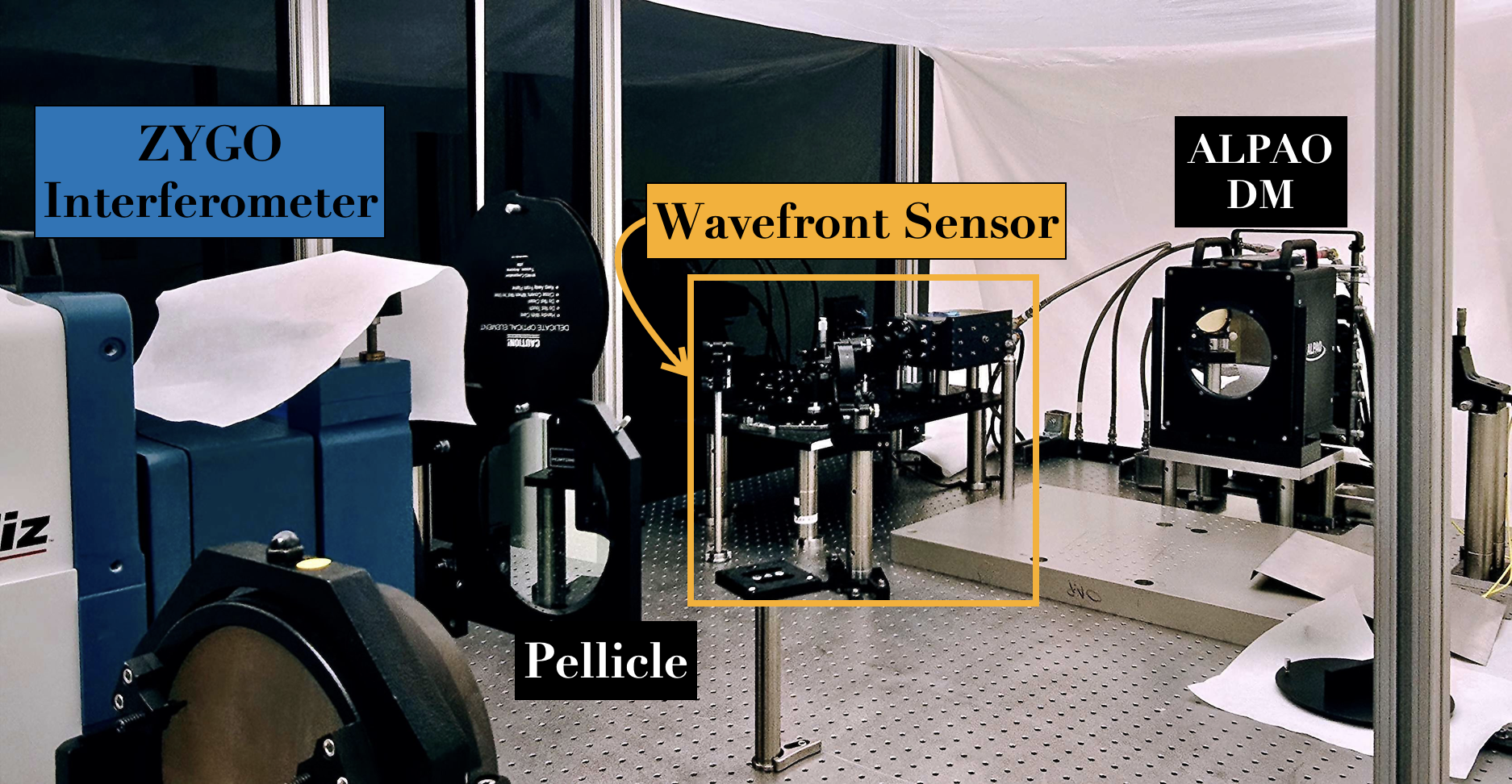
At Keck HQ I led the DM site-acceptance testing and characterization: aligning the full test bench (including the Zygo Fizeau interferometer and Shack–Hartmann WFS), measuring actuator response, building gain maps, running closed-loop flattening, and testing local/inter-actuator stroke.
We are now preparing full closed-loop operation with the upgraded WFS and controller, including subaperture configuration, telemetry, DM–lenslet registration, and interaction matrix work.
Lab testing is scheduled to finish by December 2025, with installation on Keck II targeted for February 2026 and first science with NIRC2 in May 2026.
Infrared Imaging of Protoplanetary Disks
I image disks around young stars in the near-infrared with Subaru/SCExAO+CHARIS and compare them to millimeter maps from ALMA to trace different grain sizes and disk layers.
With SCExAO’s NIR pyramid WFS (H ≈ 10–13 mag), we target IR-bright but optically faint systems previously limited by visible-light AO, resolving spirals, rings, gaps, and inner structures at ≈30 mas (J band) and ≈0.1″ inner working angle.
Multi-band CHARIS cubes provide disk colors to infer grain size/composition; scattering models and radiative-transfer tools (e.g., MCFOST/GRaTeR) are forward-modeled through the same pipeline.
Combined NIR+ALMA views constrain vertical and radial dust structure and help distinguish low- vs high-mass planet signatures via their different substructures.
Focal-Plane Speckle Suppression
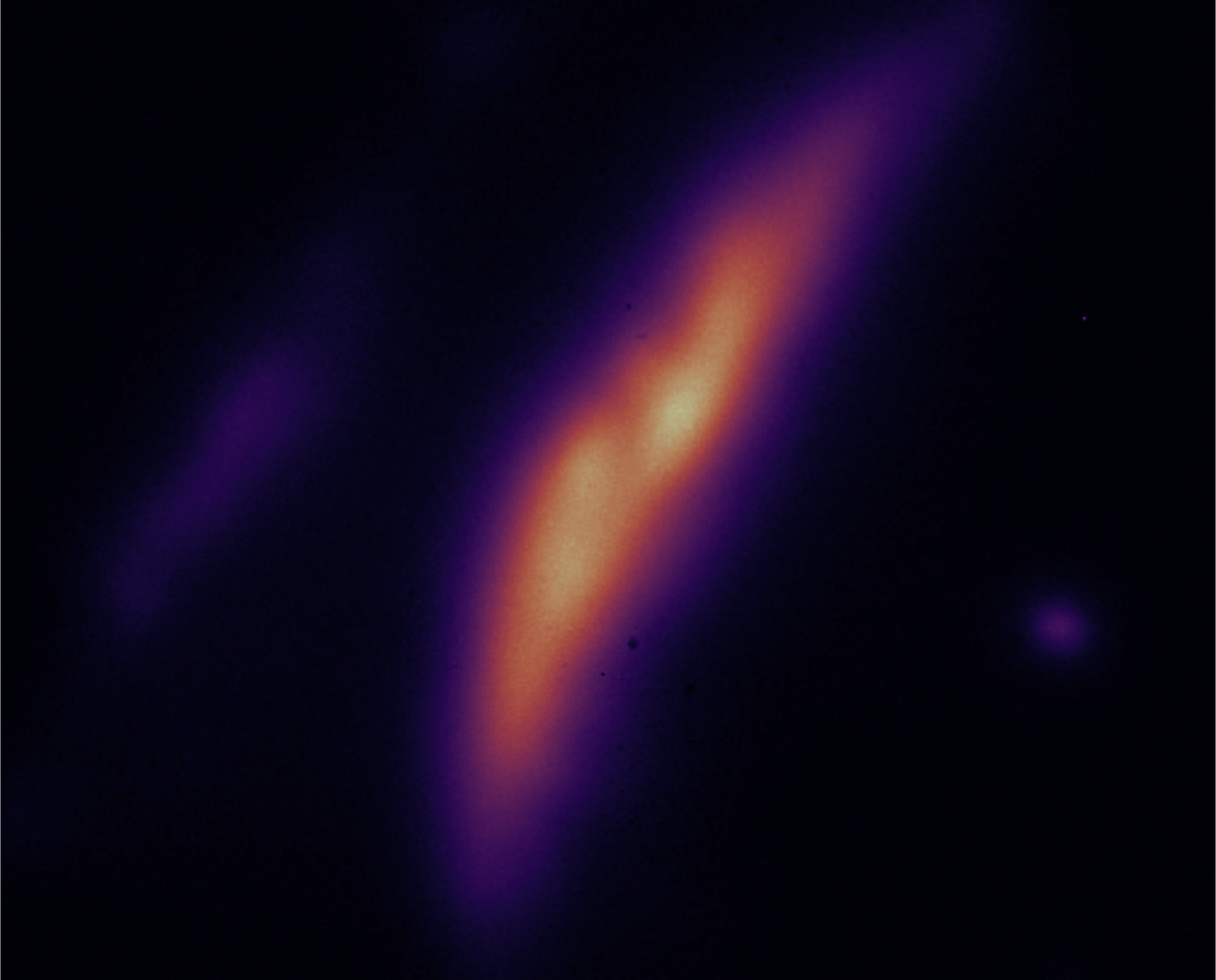
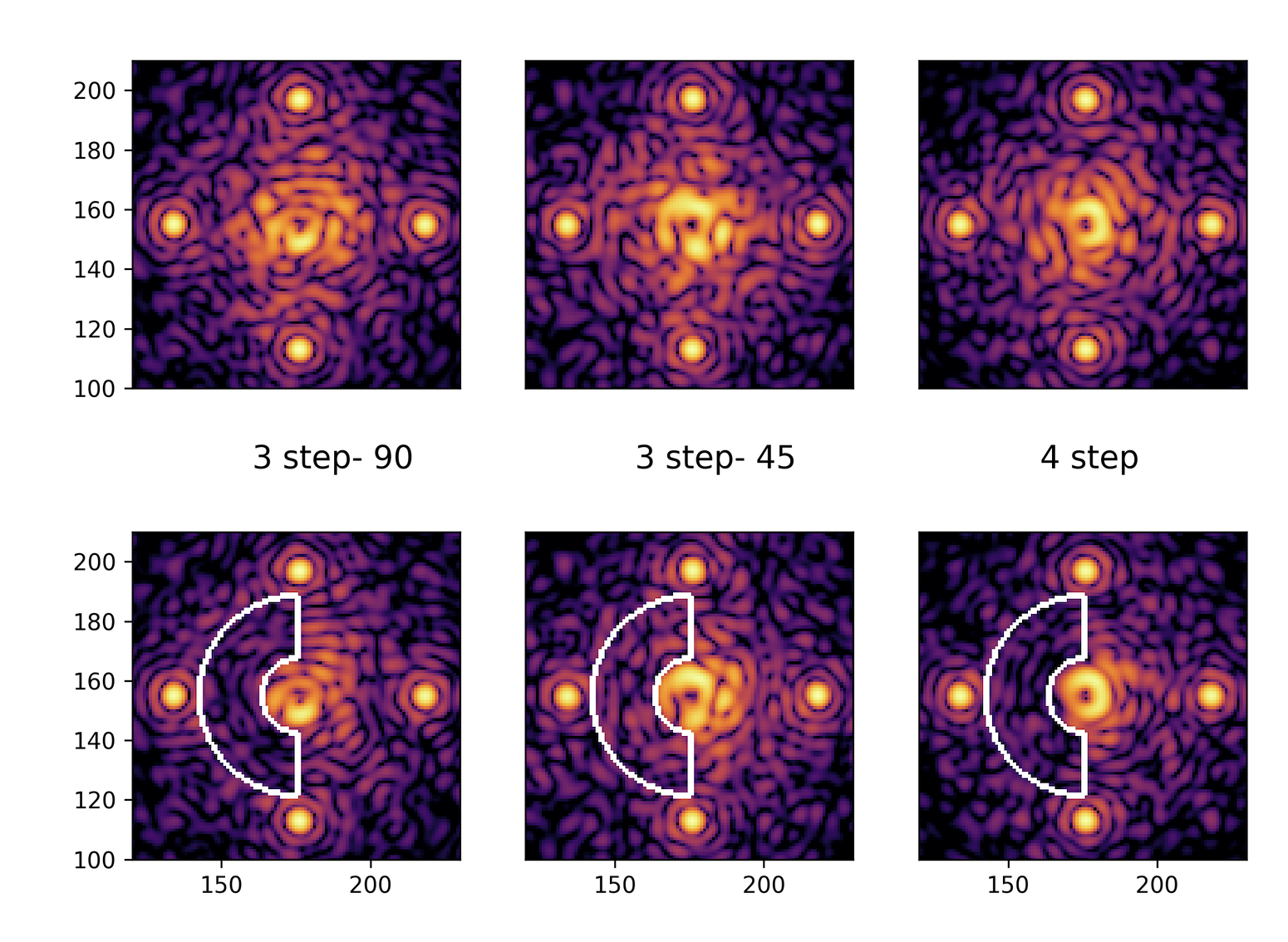
Residual “speckles” can mask faint disks or companions; I test focal-plane methods that probe and cancel speckles with the deformable mirror directly in the science image.
Beyond model-heavy EFC, I evaluate more robust, lower-overhead phase-shifting and speckle-nulling strategies for Keck/NIRC2, aiming for faster convergence (current ~30 s/iteration, ~9 iterations) and improved stability toward the background-noise limit.
These efforts are meant to deliver practical on-sky wavefront control that still works as conditions change (gravity vector, temperature, etc.).
Detector Characterization
Testing and characterization of the CRED-ONE in preparation for its integration with the Keck II AO system for the new infrared pyramid wavefront sensor.
More details to follow soon...
THIS PAGE WILL SOON BE UPDATED WITH A LIST OF RELEVANT PUBLICATIONS
Outreach
A glimpse of a session of Journey Through the Universe
I am keen on communicating my science — what I do and what I have learned. And I believe bringing their work to the general public is a social responsibility of every scientist, considering that their research is in part, if not wholly, funded by taxpayer dollars.
As such, I have been involved in various outreach and science communication activities, both within and beyond the US. These include public talks, school visits, and other astronomy and STEM events.
It is more than just fun and fulfilling to introduce the next generation of scientists to the ever-evolving astronomical research and technology; their curiosity and enthusiasm is quite inspiring and helps us appreciate our work and understand it better.
Classroom Visits
I have interacted with students all the way from kindergarten to high school, in the US and internationally. These visits usually involve a presentation on my research and career path, followed by a Q&A session.
Some of these visits were invited talks, and some were co-ordinated through programs established to connect school students with scientists in astronomy or any STEM field of their choice.
Journey through the Universe
Journey Through the Universe is an astronomy education program catered to students in public schools in the Hilo-Waiākea school distric of Hawai'i island, promoting STEM literacy and careers through classroom visits, career panels, and planetarium presentations.
Students have the opportunity to envision themselves in STEM careers and experience the unique science happening in Hawai'i and beyond through the yearly classroom visits of astronomers, engineers and other STEM professionals focusing on the Maunakea Observatories.
This program is a tremendous endeavour that foster curiosity about the cutting-edge research and technology that is allowing us to understand our place in the cosmos, and briding the gap between the local Hawaiʻi community and the astronomical research and development facilitated by the telescopes on Maunakea.
I have been involved in this program since 2022, and have visited several schools in the Hilo-Waiākea district, talking to students about the Solar System, star and planet formation, and the tradition of astronomy in Hawai'i.
Skype a Scientist
Skype a Scientist is a program that connects scientists with classrooms around the world, allowing students, and any group of interested individuals from various communities to interact with scientists in real-time through video calls.
I have been involved in this program since 2021, where I have had the opportunity to talk to students from various countries across North America, Europe, and Asia.
These interactions have been a great way to share my research and career path, and to answer questions about astronomy and my experiences as a scientist. Through some of these virtual visits, I have established connections with host classrooms and teachers, and have been invited for follow-up visits to their schools, either virtually or in-person.
High School Programs
I have been involved in several high school programs, as a mentor, and volunteer. These programs are designed to provide high school students with an opportunity to explore STEM knowledge beyond the school curriculum,
undertake research project, and come in contact with scientists and engineers to help them envision themselves in STEM careers.
Some of these programs include:
Speaking at IHS, Dubai
Hawai'i State Science and Engineering Fair (Judge)
Hawai'i State Science Olympiad (Event Supervisor)
Maunakea Scholars (Mentor)
Career Opportunities, Development & Enrichment, Indian High School, Dubai (Guest Speaker)
Public Events
AstroDay Hilo
In addition to classroom visits, I have also been involved in various public events, such as science fairs, stargazing nights, and other community events.
These events provide an opportunity for the general public to learn about astronomy and science in a fun and engaging way.
Some include:
This is bold and this is strong. This is italic and this is emphasized.
This is superscript text and this is subscript text.
This is underlined and this is code: for (;;) { ... }. Finally, this is a link.
Heading Level 2
Heading Level 3
Heading Level 4
Heading Level 5
Heading Level 6
Blockquote
Fringilla nisl. Donec accumsan interdum nisi, quis tincidunt felis sagittis eget tempus euismod. Vestibulum ante ipsum primis in faucibus vestibulum. Blandit adipiscing eu felis iaculis volutpat ac adipiscing accumsan faucibus. Vestibulum ante ipsum primis in faucibus lorem ipsum dolor sit amet nullam adipiscing eu felis.
Preformatted
i = 0;

while (!deck.isInOrder()) {
    print 'Iteration ' + i;
    deck.shuffle();
    i++;
}

print 'It took ' + i + ' iterations to sort the deck.';

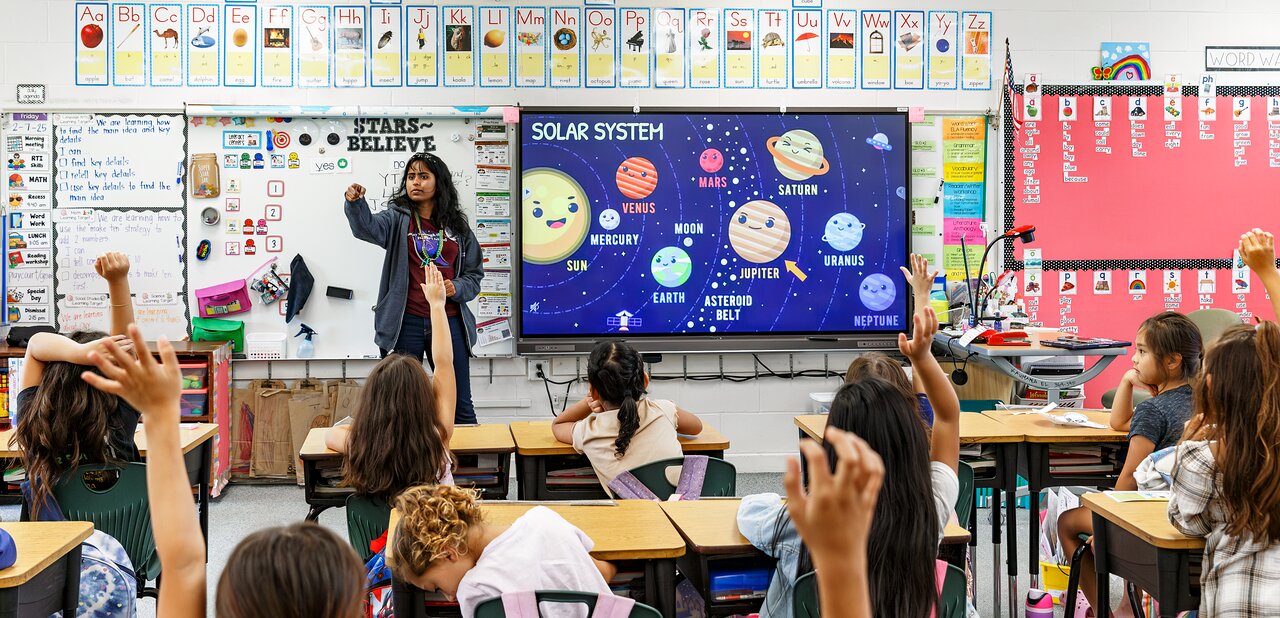 A glimpse of a session of Journey Through the Universe
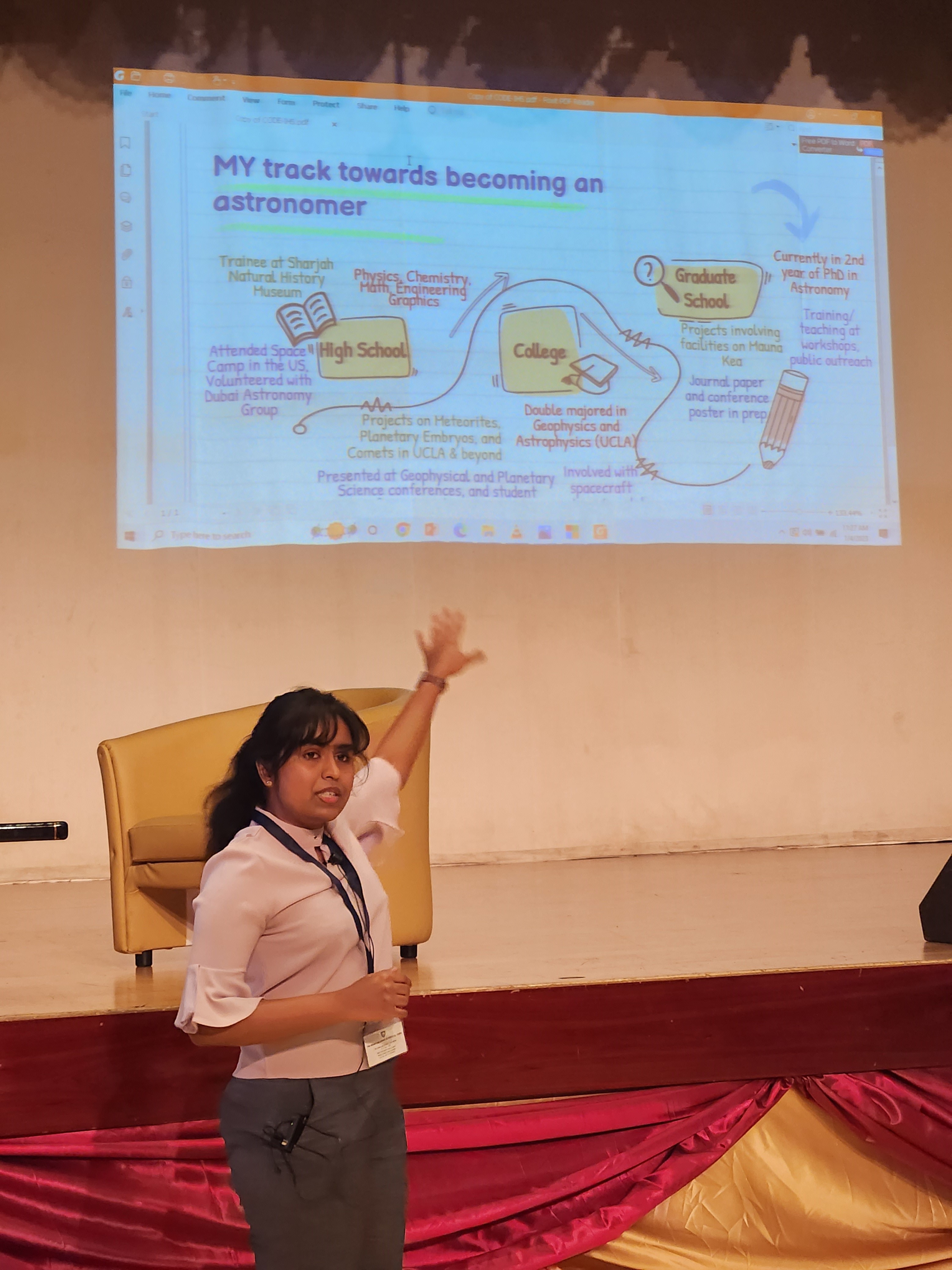 Speaking at IHS, Dubai
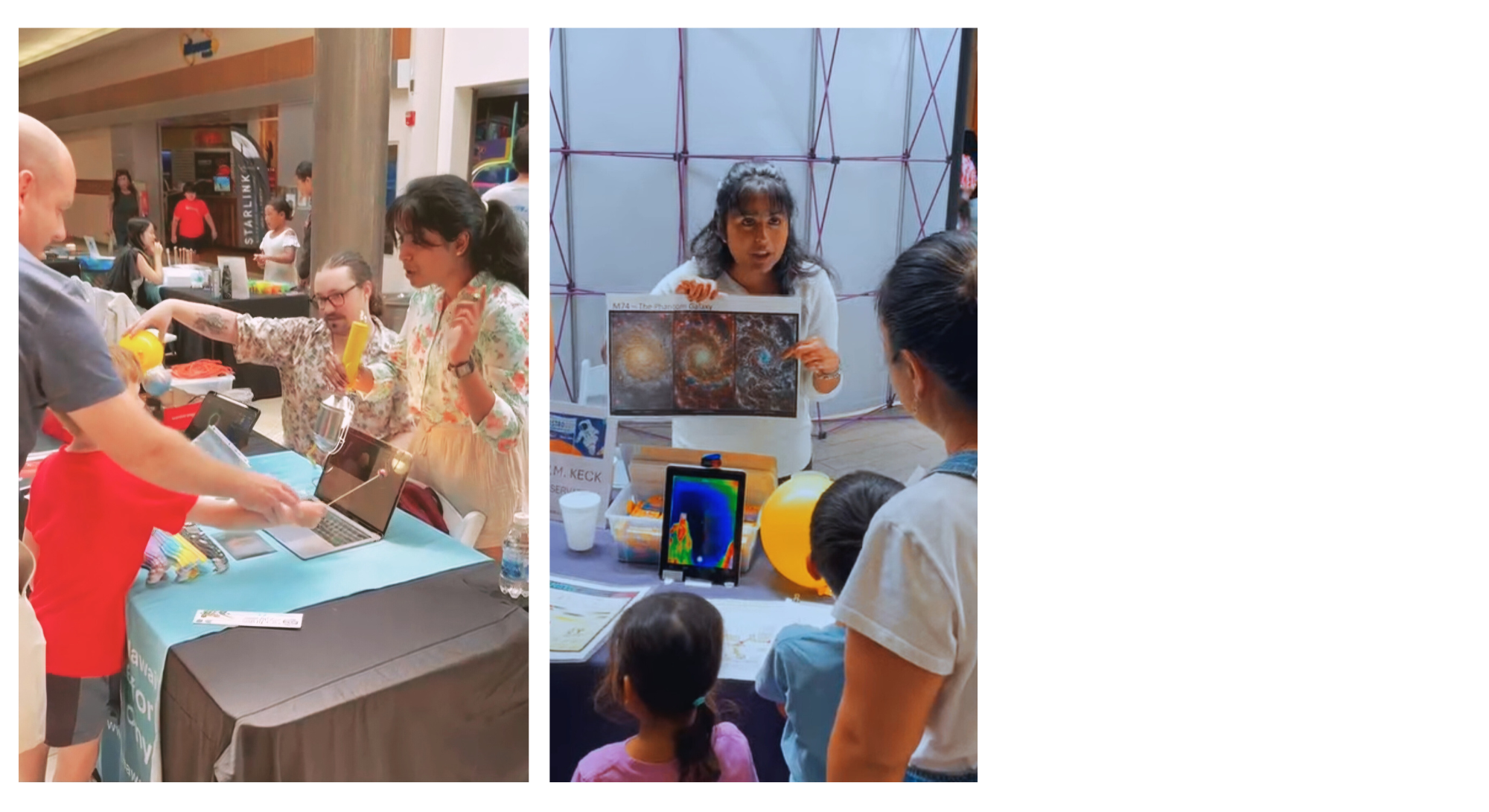 AstroDay Hilo